Kpop Demon Hunters 2: The Rise, Conflict, and Cultural Impact of a Global Phenomenon
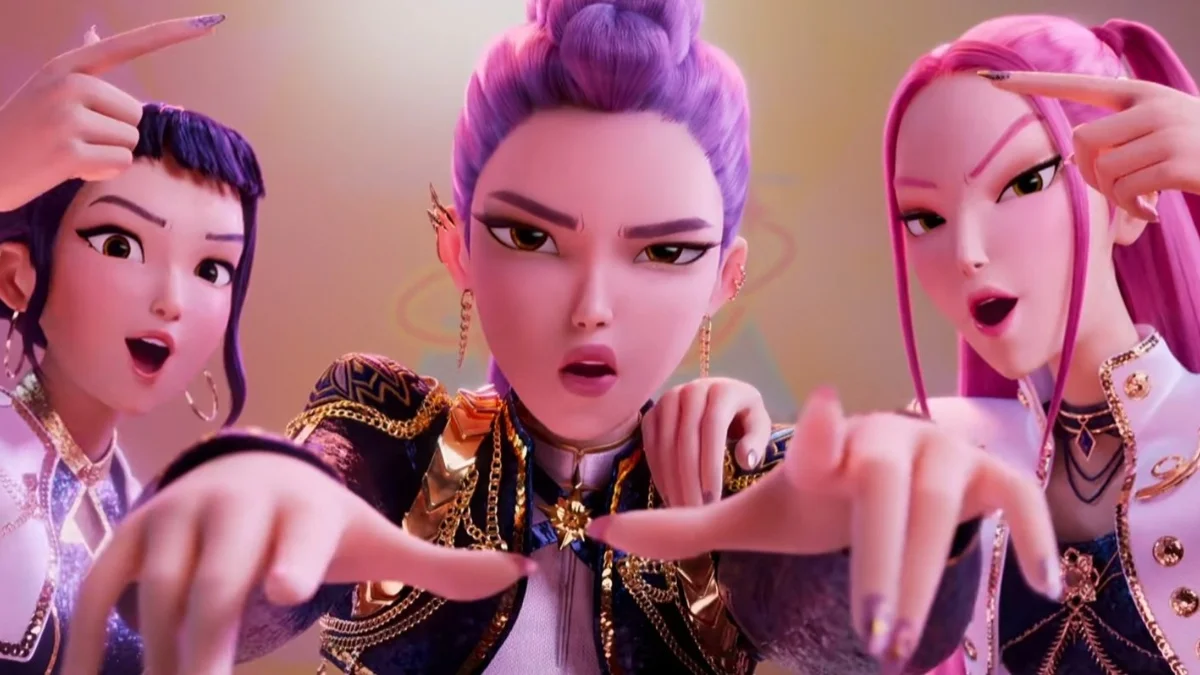
Kpop Demon Hunters 2 has become more than just a sequel concept—it’s a cultural signal, a digital-age myth, and a storytelling experiment blending K-pop aesthetics with supernatural fantasy. In the evolving entertainment landscape, Kpop Demon Hunters 2 represents how fandom energy, cinematic worldbuilding, and music-driven storytelling collide into something larger than traditional media franchises.
The conversation around Kpop Demon Hunters 2 is not just about continuation—it’s about escalation. Fans aren’t merely asking “what happens next,” but rather “how far can this universe expand?” Here is the kicker: the sequel has already taken on a life of its own through online speculation, edits, theories, and narrative predictions that rival official marketing campaigns.
It gets better: even without a fully confirmed mainstream rollout in some circles, Kpop Demon Hunters 2 has become a case study in modern fandom-driven storytelling momentum. Industry veterans often note that when audiences begin building canon-level theories independently, a franchise has already crossed into cultural permanence.
The Beginning (Origin) of Kpop Demon Hunters 2
The origin of Kpop Demon Hunters 2 is deeply tied to the success of the original Kpop Demon Hunters concept—an ambitious fusion of idol culture and supernatural warfare storytelling. At its core, the premise imagines K-pop idols not just as performers, but as secret guardians battling demonic forces hiding beneath the glamour of fame. The first wave of popularity created a hybrid identity: part fantasy action, part music-driven drama.
What makes the origin of Kpop Demon Hunters 2 particularly interesting is how quickly audience demand outpaced official narrative development. Fans didn’t wait for structured sequels; instead, they built their own expansions. Online communities began mapping character arcs, hypothesizing new villain factions, and even designing entire “season two” soundtracks. The data suggests a shift toward participatory storytelling, where audiences become co-authors.
Here is where it gets fascinating: the sequel wasn’t “announced” in the traditional sense before it was already being discussed as inevitable. The demand itself created narrative pressure. Industry analysts often point out that this is a hallmark of modern IP success—when engagement becomes preemptive storytelling infrastructure.
The Conflict (Challenges) Behind Kpop Demon Hunters 2
The biggest challenge surrounding Kpop Demon Hunters 2 is balancing spectacle with coherence. When a franchise is fueled by both music culture and supernatural lore, expectations multiply exponentially. Fans want deeper character development, stronger mythologies, more complex antagonists, and higher emotional stakes—all while maintaining the vibrant aesthetic identity that made the original appealing.
But here is the kicker: expansion always risks dilution. Industry veterans often note that sequels in hybrid genres struggle with “identity overload,” where too many narrative threads begin to compete rather than complement. For Kpop Demon Hunters 2, the challenge lies in maintaining emotional clarity amid growing world complexity.
It gets more complicated when fandom interpretation begins influencing perceived canon. Social media theories often become so widespread that audiences start expecting them to be real. This creates a unique pressure loop: creators must either validate fan theories or intentionally subvert them, both of which carry narrative risk. The conflict, therefore, is not just within the story—but between storytelling and audience imagination.
Key Takeaways: Why Kpop Demon Hunters 2 Matters
- The franchise reflects a shift toward fan-driven narrative ecosystems
- Hybrid genres (music + fantasy) create both creative freedom and structural complexity
- Audience participation now shapes sequel expectations before production begins
- Emotional storytelling remains more important than visual spectacle alone
- Viral theory culture can function as unofficial marketing momentum
This is the turning point: Kpop Demon Hunters 2 is no longer just content—it is a feedback loop between creators and global fandoms. And that loop is accelerating.
The Transformation (Impact/Success) of Kpop Demon Hunters 2
The transformation surrounding Kpop Demon Hunters 2 is best understood as cultural expansion rather than traditional sequel success. Even in speculative or early-stage discourse, the franchise has already influenced aesthetic trends in fan art, music edits, cosplay communities, and narrative remix culture.
What stands out is emotional investment. Fans don’t just consume the idea—they inhabit it. The characters are reinterpreted as symbolic representations of dual identity: public idol vs. hidden warrior. This duality resonates strongly with global audiences who understand the tension between image and authenticity in modern celebrity culture.
Here is the kicker: the impact of Kpop Demon Hunters 2 is measurable not only in viewership or streaming metrics, but in creative output. Industry observers often highlight that when user-generated content begins to rival official promotional material in volume and engagement, a franchise has achieved cultural saturation.
It gets even deeper: the transformation also reflects how storytelling is evolving into a shared digital ecosystem. The line between “viewer” and “creator” is increasingly blurred, and Kpop Demon Hunters 2 sits directly in the center of that shift.
Industry Insight: Why Kpop Demon Hunters 2 Resonates Globally
Industry veterans often note that the success of concepts like Kpop Demon Hunters 2 is rooted in emotional hybridity. K-pop itself already operates as a global emotional engine—highly stylized, narrative-rich, and deeply fan-connected. When combined with fantasy storytelling, it creates an amplified engagement structure that transcends language barriers.
The data suggests a shift toward “multi-sensory storytelling ecosystems.” Audiences no longer want passive consumption; they want immersion across music, visuals, lore, and community interpretation. Kpop Demon Hunters 2 fits this model perfectly, even in speculative form, because it encourages cross-platform engagement.
Here is the kicker: franchises like this thrive because they are not confined to one medium. They exist simultaneously as story, aesthetic, soundtrack, and social conversation. That multi-layered identity is what gives them longevity in the attention economy.
The Future of Kpop Demon Hunters 2
The future of Kpop Demon Hunters 2 depends on how well it navigates expectation versus execution. If developed as a structured narrative sequel, it has the potential to expand into serialized storytelling across multiple seasons or even transmedia formats. If left partially open-ended, it may continue thriving as a fan-constructed universe.
What’s becoming clear is that the franchise model itself is evolving. Instead of linear sequels, modern IPs are becoming ecosystems. Kpop Demon Hunters 2 sits at the intersection of that evolution, where audience imagination is not a byproduct—but a core engine.
It gets better: the strongest franchises of the future will not simply tell stories; they will host worlds. And in that sense, Kpop Demon Hunters 2 is already functioning like a world rather than a single narrative product.
Final Reflection
Kpop Demon Hunters 2 represents a new era of storytelling where music, mythology, and fandom energy merge into a single evolving system. Whether viewed as a sequel, a concept, or a cultural movement, it demonstrates how modern audiences don’t just watch stories—they build them, expand them, and keep them alive long after the screen goes dark.
You may Also Read: tycoonclub



Post Comment